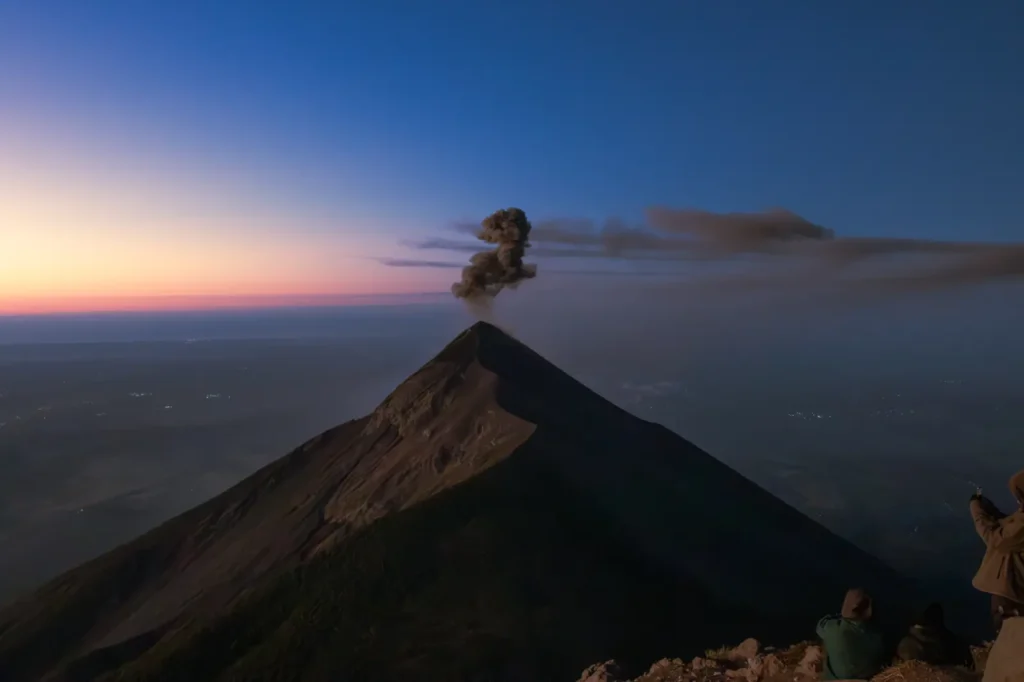
There are bucket-list hikes, and then there is Acatenango. It’s the rare trek where the reward isn’t just a view — it’s a front-row seat to one of the most active volcanoes on Earth. You climb to a camp on the shoulder of one volcano and spend the night watching the neighboring Volcán de Fuego erupt against the dark, again and again, before climbing into a sunrise above the clouds. It is, without exaggeration, one of the great overnight adventures in the Americas.
This guide is written by the people who run that hike out of Antigua, Guatemala. We’ll walk you through exactly what the experience involves — the route, the difficulty, the overnight, the costs, and how to choose the right version for you — so you arrive knowing what you’re signing up for and ready to make the most of it.
What and where is Acatenango?
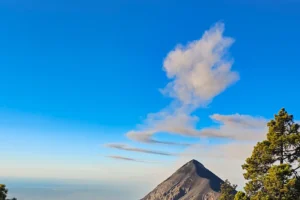
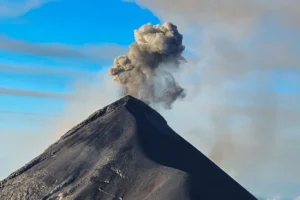
Acatenango is a 3,976-meter (13,045-foot) stratovolcano in Guatemala’s central highlands, about an hour and a half from the colonial city of Antigua. It stands shoulder to shoulder with Volcán de Fuego (“Fire Volcano”), and that pairing is the whole point: from Acatenango’s slopes you get a safe, spectacular vantage on Fuego’s near-constant eruptions, often every 15 to 20 minutes. Acatenango itself is dormant; Fuego is the one putting on the show.
The standard way to experience it is an overnight hike: climb to a base camp on day one, watch the eruptions and sleep on the mountain, then make an optional pre-dawn push to the summit for sunrise on day two.
What the hike is actually like
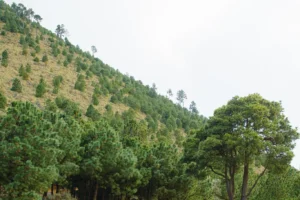
One of Acatenango’s quiet pleasures is how much the landscape changes as you climb. You pass through four distinct ecosystems in a single afternoon:
- Farmland near the trailhead village of La Soledad, where families grow corn and squash on the lower slopes.
- Cloud forest — damp, green, and mossy, home to the rare resplendent quetzal.
- High alpine forest, thinner and cooler as the air starts to bite.
- Bare volcanic slopes near base camp, where the trees give way to black sand and sweeping views.
The climb is steep, especially at the start, and the altitude is real (more on difficulty below). But the rhythm of moving through those changing worlds — and the first moment Fuego rumbles into view — is what makes the effort melt away.
The typical itinerary
Day one — the climb
You’ll usually depart Antigua around midday, drive to the trailhead near La Soledad, and begin climbing in the early afternoon. The ascent to base camp takes roughly 4 to 6 hours, gaining about 1,500 meters of elevation. You arrive at a base camp around 3,600 meters in time to settle in, warm up, and — weather permitting — watch Fuego erupt as the sun goes down. Dinner and hot drinks are prepared at camp, and the evening is spent around the fire with the eruptions as your entertainment.
Day two — the summit and descent
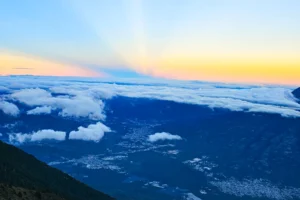
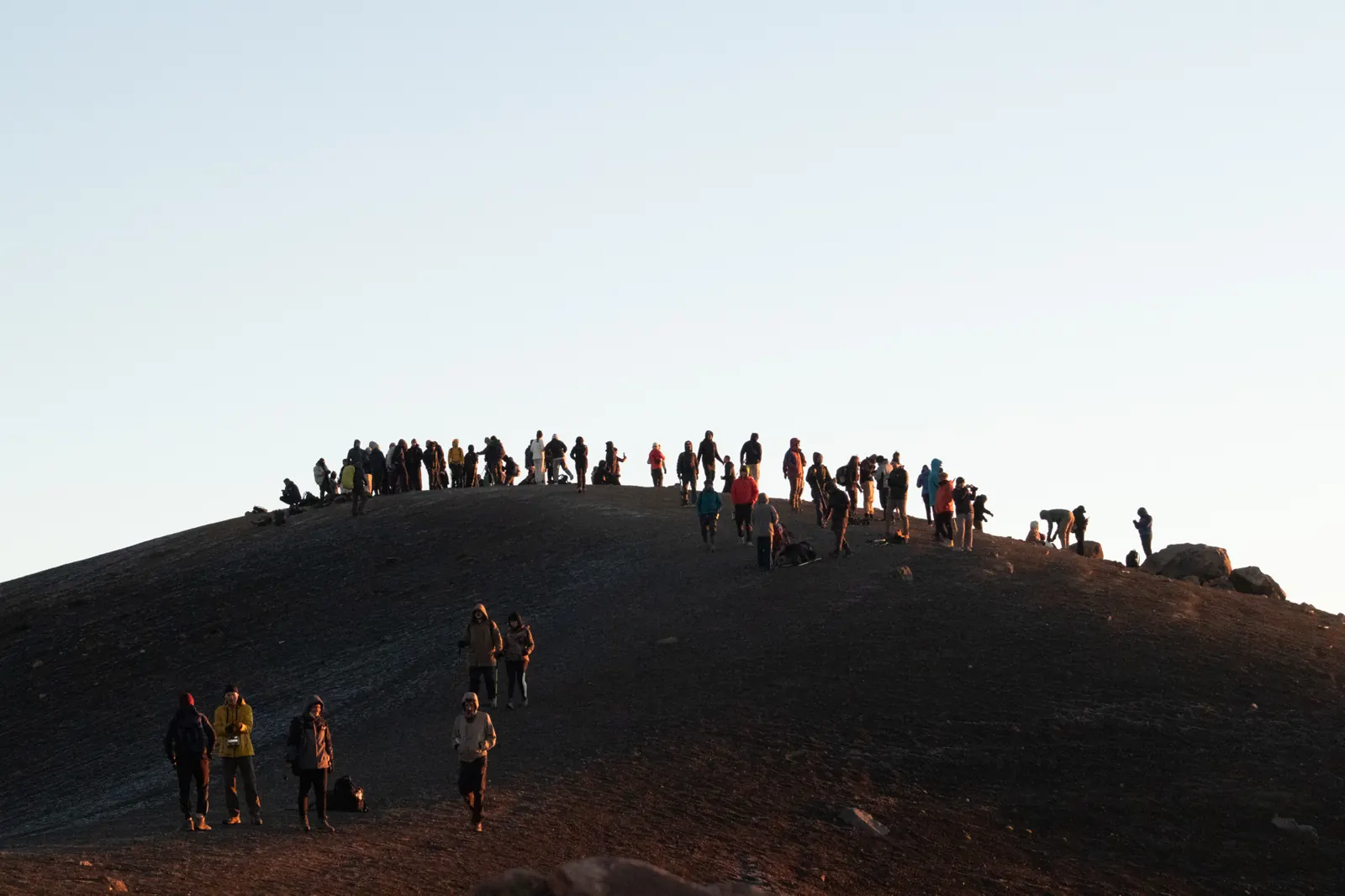
Those who want the full experience wake around 4 a.m. for the optional summit push — about 300 meters up loose volcanic scree in the cold and dark, timed to reach the 3,976 m summit for sunrise. From the top, on a clear morning, you look down on a sea of cloud with Fuego erupting below you and Guatemala’s highlands stretching to the horizon. After breakfast back at camp, you descend to the trailhead and return to Antigua, typically by early afternoon.
How hard is it?
Honestly: hard, but achievable for most reasonably active people. The three challenges are altitude (the summit’s thin air affects everyone, regardless of fitness), the steep, loose opening climb, and the scree on the summit push and descent. You don’t need technical skills or climbing experience — Acatenango is a walk, not a climb — but it’s a sustained, high, cold walk that rewards good pacing and preparation.
If the day-one ascent is your main worry, there’s a genuine shortcut: our 4×4 Basecamp Ride carries you and your gear up the steepest lower section, so you reach base camp with energy to spare for the summit. We cover the full breakdown — and how to know if you’re ready — in our dedicated guide to how hard the Acatenango hike is.
Adding Fuego: the closer look
For travelers who want to get even closer to the action, the Fuego volcano hike add-on takes you along the ridge toward Fuego itself for a more intimate view of the eruptions — one of the most jaw-dropping things you can do in Guatemala, and a popular pairing with the overnight. It’s an add-on to the Acatenango overnight rather than a standalone trip, so you’ll book the overnight first and attach Fuego to it.
What to pack (the short version)
Acatenango spans two climates — warm farmland to a freezing summit — so layering is everything. You’ll want a moisture-wicking base layer, a fleece, a warm jacket, insulated gloves, a beanie, a buff, broken-in hiking footwear, a headlamp, and at least 3 litres of water for the climb. The good news is that on a Lava Hike Adventures overnight, the big-ticket items — cabin, bed, sleeping bag, meals, and cold-weather jacket — are provided, so your pack stays light. For the complete breakdown of what to bring and what we include, see our Acatenango packing list.
When to go
Acatenango is hikeable year-round. The dry season (November–April) offers the clearest skies and best summit views but the coldest nights and biggest crowds; the rainy season (May–October) brings greener slopes, far fewer people, and frequently clear mornings despite afternoon showers. For the full month-by-month breakdown, see our guide to the best time to hike Acatenango.
How much does it cost?
Prices vary by operator and by how much comfort and privacy you want. Budget overnight tours from Antigua start low, while premium and private experiences cost more for better gear, smaller groups, and private cabins. With Lava Hike Adventures, the shared-cabin overnight is the entry point and includes your cabin bed, sleeping bag, meals, and cold-weather gear. Couples and travelers wanting more seclusion can choose the private cabin, and add-ons like the 4×4 ride and the Fuego hike let you tailor the trip to your fitness and appetite for adventure. As a rule, the cheapest tour is rarely the best value on a cold mountain at altitude — what’s included matters more than the headline price.
Choosing the right operator
You’re trusting your safety and your once-in-a-lifetime night to a guiding company, so choose carefully. Look for: experienced guides who run the route regularly, proper cold-weather gear included, real cabins (not just tents) at base camp, clear safety practices, and transparent pricing. The blogs that rank for this hike will often recommend whichever operator they happened to use — we’d simply say to look for an operator who runs Acatenango as their core business, day in and day out, and treats your comfort and safety at altitude as the priority. That’s exactly how we’ve built Lava Hike Adventures.
Is the Acatenango hike worth it?
Yes — and we’d say that even if we weren’t the ones running it. Few experiences anywhere combine the physical accomplishment, the surreal overnight beside an erupting volcano, and a sunrise above the clouds the way Acatenango does. It asks something of you, and it gives back far more. If a volcano hike in Guatemala is anywhere on your list, this is the one.
When you’re ready to make it happen, start with the Acatenango overnight hike — and bring your camera, because you won’t believe the photos until you’re looking at them.
Frequently asked questions
How long is the Acatenango hike?
It’s an overnight, two-day trip. Day one is roughly 4–6 hours of climbing to base camp; day two is an optional pre-dawn summit push followed by the descent, usually back in Antigua by early afternoon.
Do you sleep on Acatenango?
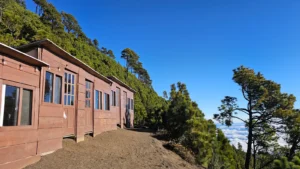
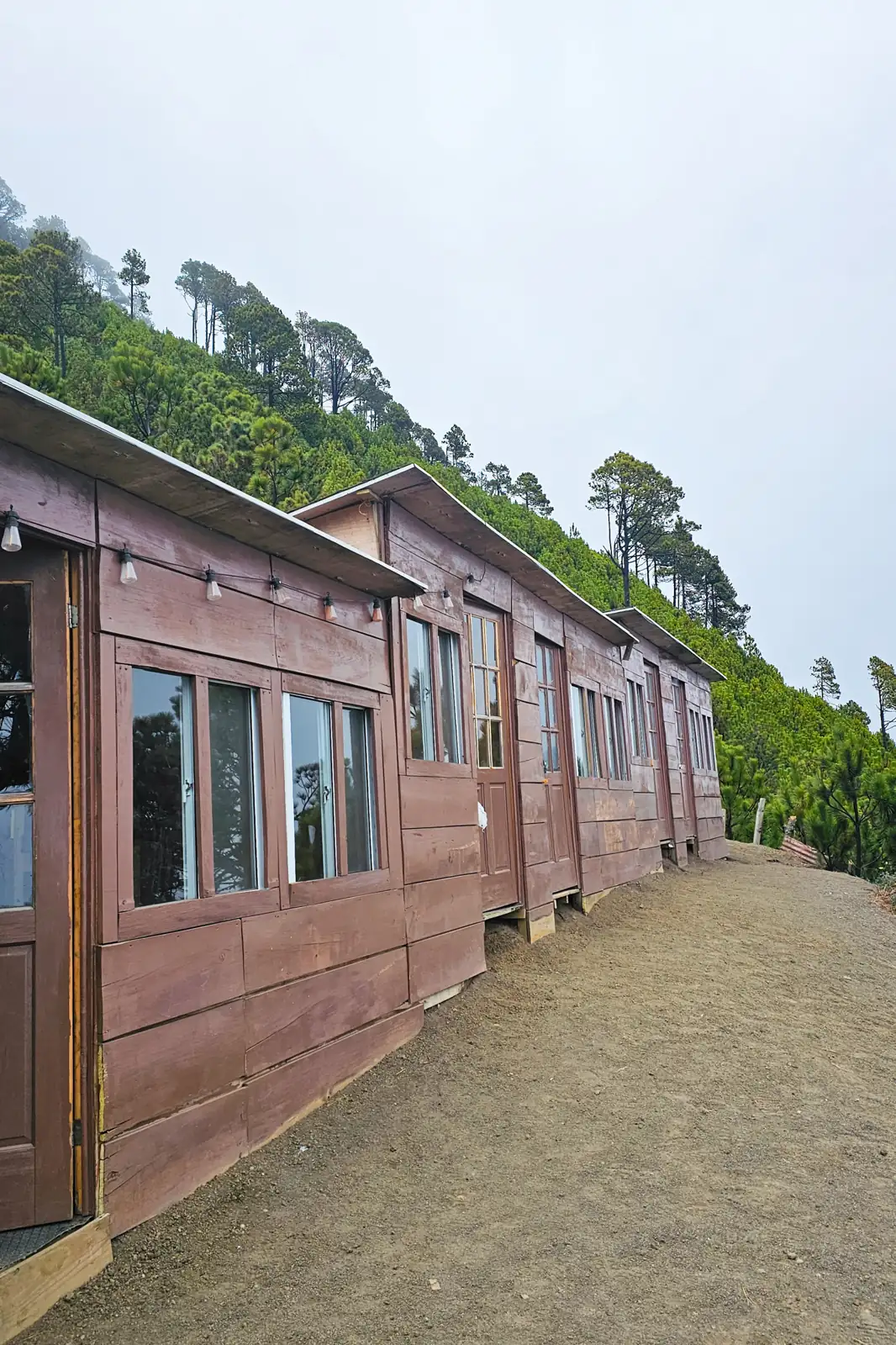
Yes. You spend the night at a base camp around 3,600 meters. With Lava Hike Adventures, that means a cabin with a bed and sleeping bag — not a tent on the ground — positioned for views of Fuego erupting.
Can you see lava on the Acatenango hike?
You watch neighboring Volcán de Fuego erupt, often every 15–20 minutes, frequently throwing glowing rock and lava visible from base camp. Acatenango itself is dormant and safe to camp on; Fuego provides the show from a safe distance.
Do I need a guide to hike Acatenango?
A guided tour is strongly recommended and is how nearly everyone does it. Guides handle the route, safety, cold-weather gear, food, and base-camp logistics at altitude — and it’s far safer than attempting the mountain alone.
How do I get to Acatenango?
The hike starts from the village of La Soledad, about 1.5 hours from Antigua. Tour operators, including us, handle round-trip transport from Antigua as part of the experience.
What’s the difference between Acatenango and Fuego?
Acatenango is the dormant volcano you hike and sleep on. Fuego is its highly active neighbor that erupts continuously — you watch Fuego from Acatenango. Our Fuego add-on takes you closer along the connecting ridge for an even better view.