Most Acatenango packing lists are written by travelers who did the hike once, loved it, and tried to remember what they wished they’d brought. They’re useful, but they all share the same blind spot: they don’t know what your tour operator includes, so they tell you to pack everything. The result is a 14-kilogram bag dragging you backward up a volcano.
We run the Acatenango overnight hike out of Antigua, day in and day out. We’ve watched thousands of guests summit, and we’ve seen exactly what people carry that they never touch, and the small things they forget that quietly ruin a night at 3,600 meters. This list is built from that experience. It tells you what to bring, what we already hand you, and what to leave in your hotel locker in Antigua.
The golden rule: on this hike, less weight is more summit. Every item you don’t carry is energy you keep for the climb.
First, what Lava Hike Adventures already provides
Before you pack a single thing, know what you don’t need to. On every Lava Hike Adventures overnight, your cabin stay and the cold-weather essentials are handled:
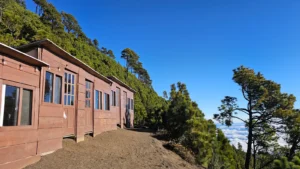
- A bed in a base-camp cabin with a real mattress, blankets, and a sleeping bag — you are not sleeping on the ground.
- A warm insulated jacket and gloves for the freezing summit push, available to borrow.
- All meals from lunch on day one through breakfast on day two, plus hot drinks at camp.
- Trekking poles on request — genuinely worth taking.
- Drinking water provided at base camp.
That means the long list of “bring a four-season sleeping bag and a tent” advice you’ll find on travel blogs simply doesn’t apply to our guests. And if you’d rather not carry a pack up the steepest section at all, our 4×4 Basecamp Ride add-on takes you and your gear most of the way up the mountain, a popular choice for travelers who want the summit and the eruptions without the full ascent under load.
The clothing that actually matters: layering for two climates in one hike
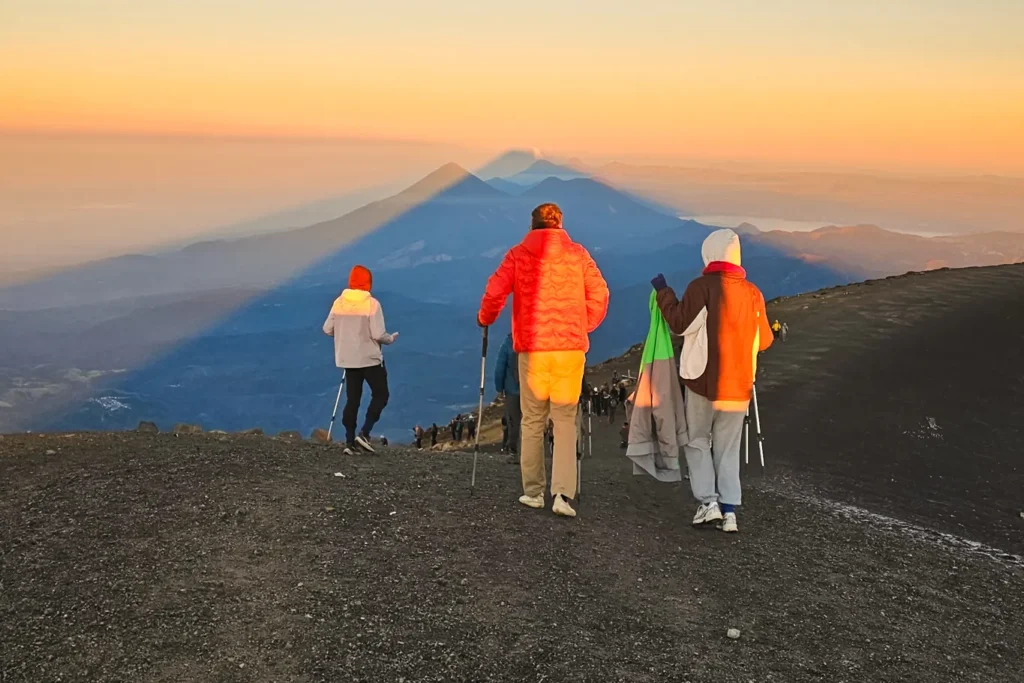
Acatenango is two trips in one body. You start in warm farmland near La Soledad and finish on a freezing, wind-scoured summit at 3,976 meters where night temperatures routinely drop to around 0°C (32°F), colder in December and January. You cannot dress for one without the other. The answer is layers you add and shed as you climb.
Base layer (next to skin)
One technical or merino-wool top. Merino is worth it: it stays warm when damp and doesn’t hold odor. Cotton is the one fabric to avoid, it soaks up sweat and chills you the moment you stop moving.
Mid layer (warmth)
A fleece or light down/synthetic pullover. You’ll put this on the second you reach base camp and the sun drops.
Outer layer (wind and warmth)
A packable puffer jacket for camp and the summit. We provide a borrow jacket, but if you run cold, bring your own and wear both for the pre-dawn summit push, that’s the coldest hour of the trip.
Legs
Hiking trousers or leggings for the climb; a warm second layer (thermal leggings or joggers to pull over) for the night. The classic move our guests use: hike in one layer, add the second at camp.
Hands, head, neck
Insulated gloves, thin running gloves are not enough at the summit. A warm beanie even if your jacket has a hood, and a buff or neck gaiter to pull over your nose and mouth when the wind bites on the summit ridge.
Footwear
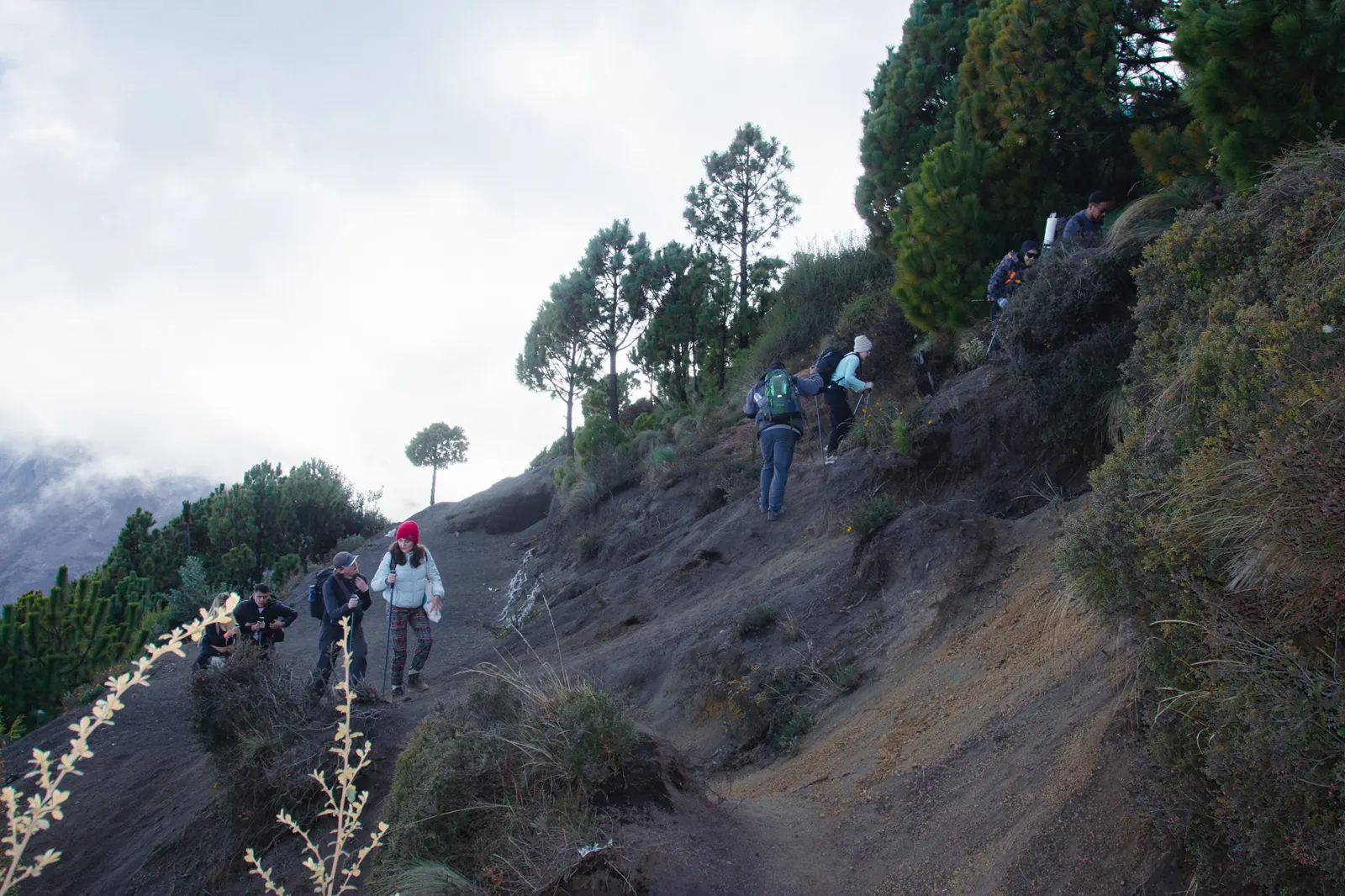
Broken-in hiking boots or sturdy trail shoes with real grip. The descent is on loose volcanic scree, and ankle support saves knees. Do not buy new boots for this hike, blisters at altitude are miserable. Pack one spare pair of warm socks (wool, not cotton) to change into at camp; dry feet are happy feet.
Inside your daypack: the things people forget
You’ll carry a daypack for the climb. Keep it light, but don’t skip these:
- Water: 3 litres minimum. There is no water source on the trail. We provide water at base camp, but you need enough to get up there. A 2–3 litre bladder or two large bottles is right.
- Headlamp (with fresh batteries). The summit hike leaves camp in the dark, around 4 a.m. A phone flashlight won’t cut it, you need your hands free for scrambling.
- Power bank. Cold drains phone batteries fast, and you’ll want yours alive for the most photogenic sunrise of your life.
- Snacks. Meals are included, but trail snacks, nuts, chocolate, dried fruit, keep your energy steady on the long climb.
- Sunglasses and sunscreen. The equatorial sun at altitude is fierce, even when it’s cold. Reapply at base camp.
- Lip balm. Wind and altitude crack lips raw.
- Toilet paper, hand sanitizer, and a small bag for trash. Facilities are rustic. Pack out what you pack in.
- Cash (small Quetzal bills). For a porter if you’d like one, snacks at the trailhead, or a tip for your guide.
The smart extras (small weight, big payoff)
These aren’t essential, but our most comfortable guests carry them: a lightweight pair of camp gloves you don’t mind getting dirty around the fire; wet wipes for a quick clean-up before bed; a reusable insulated cup for the hot drinks at camp; a compact camera or, honestly, just a charged phone with storage cleared; and a small first-aid kit with blister plasters, ibuprofen, and any personal medication. If you’re prone to altitude headaches, talk to your doctor before the trip about whether prophylactic medication is right for you.
What to leave behind in Antigua
This is the part the blogs skip. Leaving the right things behind is how you keep your pack light:
- A full-size suitcase or anything wheeled. Your hotel in Antigua will hold your main luggage, bring only your daypack up the mountain.
- A tent and a heavy sleeping bag. Your cabin and sleeping bag are provided.
- Multiple outfit changes. This is one night. You do not need a fresh outfit for the summit photo.
- Jeans and cotton everything. Heavy, useless when wet, cold when you stop.
- Valuables you don’t need. Less to worry about, less to carry.
A sample packed daypack
To make this concrete, here’s roughly how a well-packed Acatenango daypack looks for a Lava Hike Adventures guest, light, complete, and nothing wasted:
- Worn on the way up: base layer, hiking trousers, trail shoes, sun hat, sunglasses, and a light layer tied around the waist for when you stop.
- In the pack for camp and summit: fleece, puffer jacket, beanie, insulated gloves, buff, thermal layer for your legs, and warm spare socks.
- Always accessible: 3 litres of water, headlamp, power bank, snacks, sunscreen, lip balm, toilet paper, hand sanitizer, and a small trash bag.
- Small comforts: wet wipes, a reusable cup, lightweight camp gloves, blister plasters, and any personal medication.
- Left in Antigua: suitcase, spare outfits, tent, heavy sleeping bag, valuables.
That bag, with our included gear doing the heavy lifting, keeps most guests comfortably under 6 kilograms, light enough to actually enjoy the climb.
A quick word on photography
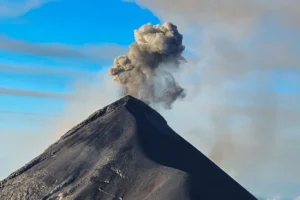
You will take more photos on this hike than almost any other trip, so prepare for it. Cold drains batteries fast, so keep your phone or camera warm (an inside pocket helps) and bring a power bank. Clear some storage before you arrive, between Fuego’s eruptions at dusk and the sunrise from the summit, you’ll fill it faster than you expect. A small, sturdy phone tripod is optional but pays off for long-exposure shots of the eruptions at night. And don’t spend the whole night behind a lens, some of the best moments are the ones you just sit and watch.
The bottom line
Pack for cold even though you start warm, keep total weight low, and lean on what we already provide. The travelers who enjoy Acatenango most aren’t the ones with the most gear, they’re the ones carrying a light pack, wearing the right layers, and saving their legs for the summit. If carrying even a daypack up the steep section sounds like too much, the 4×4 Basecamp Ride is built exactly for that.
When you’re ready, the Acatenango overnight hike starts at a price that includes the cabin, meals, and cold-weather gear above, so this packing list is genuinely all you need to think about.
Frequently asked questions
Do I need to bring a sleeping bag for Acatenango?
No. Lava Hike Adventures provides a bed, blankets, and a sleeping bag in a base-camp cabin. You sleep indoors, not in a tent on the ground.
How much water should I carry up Acatenango?
At least 3 litres per person for the climb. There's no water source on the trail; we provide more water once you reach base camp.
Can I rent gear instead of buying it?
The cold-weather jacket and gloves are available to borrow from us, and trekking poles are provided on request. The one thing we recommend you bring yourself is well-fitting, broken-in footwear — rented or brand-new boots are the leading cause of blisters.
How heavy will my bag be?
If you follow this list and use our included gear, your daypack should sit around 4–6 kg. Want to carry even less? Add a porter, or take the 4x4 Basecamp Ride so your pack rides up with you.
What should I wear for the summit hike?
Your warmest combination: base layer, fleece, puffer jacket, beanie, insulated gloves, and a buff over your face. The pre-dawn summit is the coldest, windiest hour of the trip — over-dress and shed layers as the sun rises.