It’s a fair question, and one we’d want answered too before climbing a volcano next to an erupting one. The short, honest answer: with a reputable guide, sensible preparation, and respect for the mountain, the Acatenango hike is challenging but safe. Tens of thousands of travelers do it every year and come home with nothing worse than sore legs and a full camera roll.
But “safe” doesn’t mean “risk-free,” and you deserve the full picture rather than a sales pitch. As an operator that climbs this mountain constantly, here’s our straight take on each concern people raise, and what actually keeps you safe up there.
“Isn’t it dangerous to camp next to an erupting volcano?”
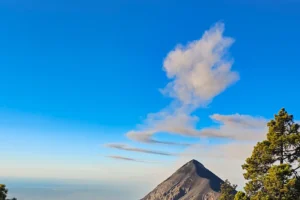
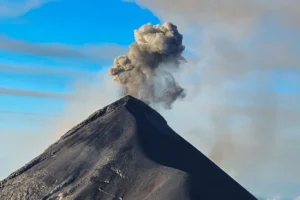
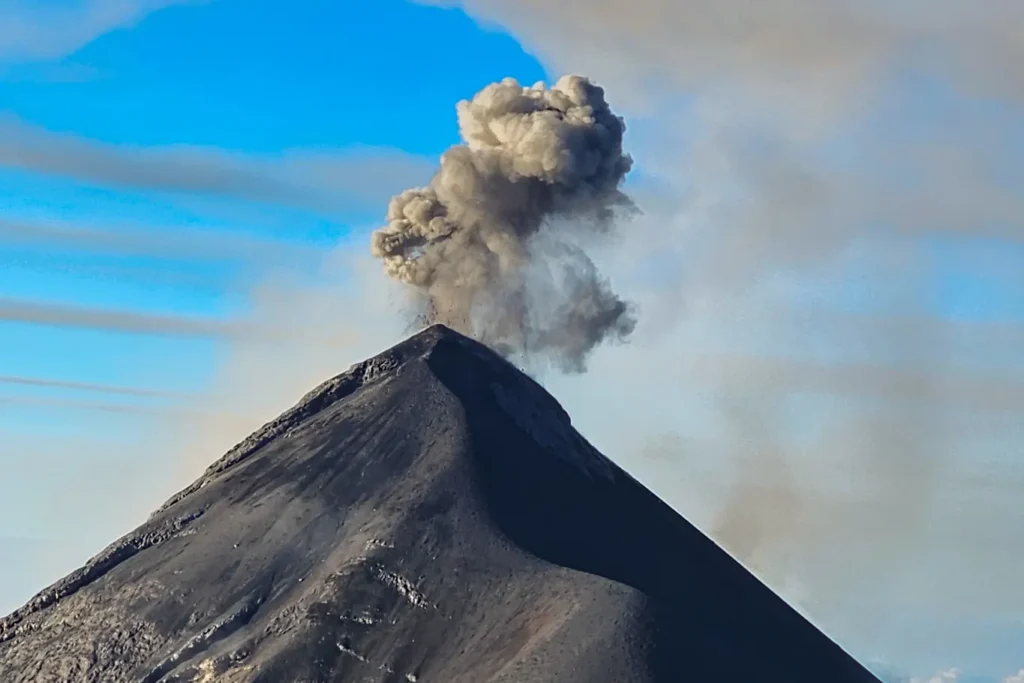
This is the question we hear most, and the answer hinges on an important distinction: you hike and sleep on Acatenango, which is dormant. The volcano that erupts is Fuego, its neighbor, and you watch it from a safe distance across a valley. Base camp is positioned roughly 1.5 to 2 kilometers from Fuego’s summit, far enough that the frequent small eruptions are a spectacle, not a threat.
Fuego is one of the most active volcanoes in Central America and erupts on a small scale every 15 to 30 minutes, that’s the show you’re there for. Larger eruptions are far rarer. The serious 2018 eruption that made international news affected communities low on Fuego’s own slopes; it did not endanger hikers on Acatenango. Today, Fuego’s activity is monitored by Guatemala’s volcanology institute (INSIVUMEH), and responsible operators keep informed of conditions. If activity ever rose to a level of concern, the answer is simple and non-negotiable: the itinerary changes. No view is worth a real risk, and any operator who tells you otherwise is the wrong operator.
The real risks (and they’re manageable)
The honest truth is that the genuine hazards on Acatenango are the ordinary mountain ones, not the dramatic volcanic ones. Here’s what actually matters:
Altitude
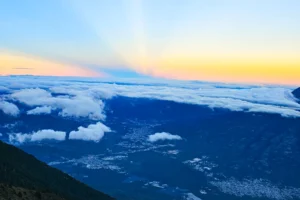
You sleep around 3,600 meters and summit at 3,976 meters. Most people feel nothing worse than breathlessness or a mild headache, but altitude affects everyone differently and ignores fitness. Serious altitude sickness is uncommon on a one-night ascent at this elevation, but it’s possible. The defenses are straightforward: spend a night or two in Antigua (around 1,500 m) beforehand to acclimatize, hydrate well, ascend at a steady pace, and tell your guide immediately if you feel unwell. Guides are trained to recognize the signs and to descend with anyone who needs to, descent is the reliable cure.
Cold and exposure
Summit temperatures sit around freezing, colder with wind chill. The risk here is being underdressed, which is entirely preventable with proper layers and the cold-weather gear a good operator provides. (Our packing list covers exactly what to bring.)
Slips and falls on the terrain
The loose volcanic scree, especially on the descent, is the most common cause of minor injuries, twisted ankles, scrapes. Sturdy footwear, trekking poles, and not rushing handle this. Going at the group’s pace rather than racing is the single best safety habit on the mountain.
Getting lost or caught out alone
People who attempt Acatenango independently, without a guide, take on far more risk, unmarked junctions, fast-changing weather, and no support if something goes wrong. This is the main reason we and every reputable source recommend going with a guided tour.
The pattern across all of these: most incidents on Acatenango come from bad decisions, not bad luck, rushing, ignoring weather, skipping layers, going alone, or pushing on when the body says stop. A good guide and a prepared hiker remove most of that.
How a quality operator keeps you safe
This is where your choice of company genuinely matters for safety, not just comfort:
- Experienced local guides who know the route in all conditions, set a safe pace, and carry a first-aid kit.
- Awareness of Fuego’s activity and the willingness to adjust or turn back if conditions change.
- Proper cold-weather gear included, so no one is dangerously underdressed.
- Reasonable group sizes so guides can keep an eye on everyone.
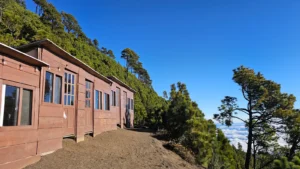
- Real cabins for warm, sheltered sleep rather than exposure in flimsy tents.
These are exactly the standards we hold ourselves to at Lava Hike Adventures, because the mountain rewards respect and punishes shortcuts.
What to do if you feel unwell at altitude
Knowing the plan in advance takes a lot of the worry out of it. If you start feeling rough at base camp or on the climb, a persistent headache, nausea, dizziness, or unusual breathlessness, the response is simple and never embarrassing: tell your guide right away. Mild altitude symptoms are common and usually ease with rest, water, and slowing down. Guides see this regularly and won’t make a fuss; they’d far rather know early.
The reliable cure for altitude sickness is descent, and because you’re never far from the trail down, help is always available. If symptoms are mild, you can often rest at base camp and skip the optional summit push while still enjoying the eruptions. If they’re more serious, your guide will arrange to get you down, which resolves the vast majority of cases quickly. The key is to speak up early rather than pushing through quietly, which is how a manageable situation becomes a real one. Hydration, a steady pace, and a night acclimatizing in Antigua beforehand prevent most issues in the first place.
A note on going with a group vs. alone
You’ll occasionally read about people hiking Acatenango independently to save money. We strongly advise against it, and not for commercial reasons. An unguided hiker faces unmarked trail junctions, weather that can change fast, no cold-weather gear safety net, and, most importantly, no one to help if altitude, injury, or exposure becomes a problem in the dark at 3,600 meters. The serious incidents that have occurred on this mountain are overwhelmingly among underprepared, unguided hikers caught out by cold. Going with a reputable guided group isn’t just easier; it’s the single biggest safety decision you’ll make.
Who should take extra caution
Be honest with yourself, and talk to a doctor first, if you have a significant heart or lung condition, are pregnant, have had altitude sickness before, or are recovering from injury. Acatenango is non-technical, no ropes or climbing skill needed, but it is high, cold, and sustained. If altitude is a real medical concern for you, the lower, shorter Pacaya hike is a gentler way to experience a Guatemalan volcano.
The bottom line
Acatenango is safe for the vast majority of travelers who prepare properly and go with a reputable guide. The eruptions you’re watching are at a safe distance; the genuine risks, altitude, cold, footing, are well understood and manageable with the right gear, pacing, and guidance. Go prepared, listen to your guide, respect the mountain, and you’re in for one of the safest feeling thrills of your life: a front-row seat to an erupting volcano, with people whose job is to get you up and down well.
When you’re ready, our Acatenango overnight hike includes the guiding, gear, and cabins that make it safe as well as spectacular.
Frequently asked questions
Has anyone died hiking Acatenango?
Rare fatalities have occurred over the years, most associated with extreme cold and exposure among underprepared, unguided hikers. These tragedies underline why proper cold-weather gear and a reputable guided tour matter so much. With preparation and good guiding, the hike is safe for the vast majority of travelers.
Is it safe to be so close to Fuego volcano?
Yes. You watch Fuego from across a valley on Acatenango, roughly 1.5–2 km from Fuego's summit — close enough to see eruptions clearly, far enough to be safe. Fuego's activity is monitored, and responsible operators adjust plans if conditions change.
Will I get altitude sickness on Acatenango?
Some people feel mild symptoms (headache, breathlessness, poor sleep) at base-camp altitude. Serious altitude sickness is uncommon on a one-night ascent here but possible. Acclimatize in Antigua first, hydrate, ascend slowly, and tell your guide if you feel unwell.
Do I need a guide for safety?
Strongly recommended. Guides handle navigation, pacing, cold-weather gear, first aid, and awareness of volcanic and weather conditions. Attempting Acatenango alone significantly increases the risk.
What happens if the weather turns dangerous?
A responsible operator monitors conditions and will modify the route, delay the summit push, or descend if necessary. Safety decisions always override the itinerary.