The short answer most guides give you is “the dry season, November to April.” It’s not wrong, but it’s the kind of answer that hides as much as it reveals. The “best” time depends on what you’re optimizing for: the clearest summit views, the warmest nights, the fewest people, the greenest landscape, or the best chance of catching Fuego in full eruption. Each season trades one of those for another.
We send guests up Acatenango all year, in every condition the mountain throws at us. Below is the honest breakdown, what each season and month actually delivers, so you can pick the window that fits your trip, not just the one a blog told you was “best.”
The two seasons that shape everything
Guatemala’s highlands run on two seasons, and Acatenango sits high enough that both feel exaggerated up there.
Dry season (roughly November to April)
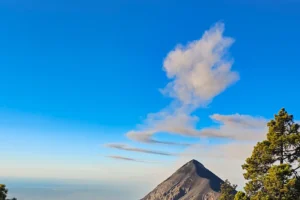
This is the postcard window. Skies are clearest, trails are firmest, and your odds of a crisp, cloud-free sunrise over the volcanoes are at their best. The trade-offs: nights are genuinely cold; summit temperatures hover around 0–5°C (32–41°F) and can drop below freezing in December and January, and this is peak season, so base camp is busier and popular dates book out well ahead.
Rainy season (roughly May to October)
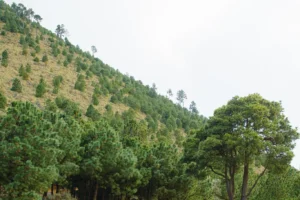
Don’t write it off. Yes, afternoons often bring showers and the trail can be muddy, and cloud cover can hide the view. But the upsides are real: the slopes turn brilliant emerald green, crowds thin out dramatically, and, a local secret, mornings are frequently clear even in the wet months, because the rain tends to build in the afternoon and clear overnight. A rainy-season summit can deliver a perfectly clear sunrise with the mountain almost to yourself.
Month-by-month at a glance
| Month | Weather & visibility | Nights | Crowds | Our take |
|---|---|---|---|---|
| January | Driest, clearest skies | Coldest (often below freezing) | High | Best views of the year, bring serious layers |
| February | Excellent, clear | Very cold | High | Prime time; book early |
| March | Clear, warming up | Cold | High | Great balance of views and slightly milder nights |
| April | Clear, warmest of dry season; haze possible late month | Cold-ish | High | Last of the reliable dry window; can be hazy from regional fires |
| May | Transition; showers begin | Milder | Dropping | Green returns, crowds ease, clear mornings common |
| June | Rainy afternoons, clear mornings | Mild | Low | Underrated, lush and quiet |
| July–August | Wet, but a short mid-summer dry spell (“canícula”) | Mild | Moderate | Variable; the brief dry break can be excellent |
| September | Wettest stretch | Mild | Low | Greenest landscape; highest chance of clouded views |
| October | Rain easing late month | Mild | Low | Quiet and green; views improving toward month’s end |
| November | Dry season returns | Cooling | Rising | Sweet spot, clearing skies, crowds not yet at peak |
| December | Dry, clear, festive | Cold | High (holidays) | Beautiful but busy and cold; book well ahead |
Choosing by what matters to you
If you want the clearest possible views:
Aim for January to March. This is when the odds of a flawless, cloud-free sunrise over Fuego and Acatenango are highest. Pack for cold — this clarity comes with the coldest nights of the year.
If you want to avoid crowds:
Go in the shoulder months: May, June, October, or November. You’ll trade some weather certainty for a quieter base camp, greener scenery, and easier booking. Clear mornings are still very much on the table.
If you want the warmest nights:
The rainy-season months are milder after dark than the deep-dry-season nights of December–February. You’ll still want layers, but you’re less likely to be shivering at 3,600 meters.
If catching Fuego erupting is your priority:
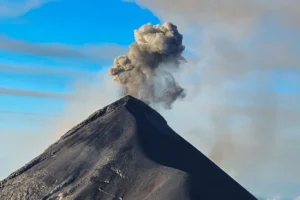
Good news, Fuego is consistently active year-round, often erupting every 15–20 minutes regardless of season. What changes is your ability to see it. Dry-season clarity gives the best odds of an unobstructed show, but even in the wet months, clear evenings and mornings frequently deliver.
A few timing details that genuinely matter
Weekends and holidays are the busiest
If a quieter mountain appeals, target a midweek date. Guatemalan public holidays and the December–January period draw the biggest crowds.
Book peak dates early
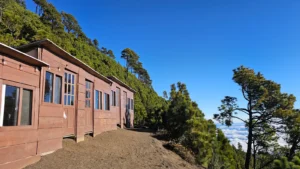
For January–March and the December holidays, popular dates fill weeks ahead. If your travel dates are fixed, reserve your hike as soon as you can. Our Private Cabin option is especially worth booking early in peak season if you want a more secluded base-camp experience away from the busiest dorms.
The summit is cold in every season
No month lets you skip the warm layers. Even in the “warm” rainy season, the pre-dawn summit push is near freezing in the wind. Dress for it (our packing list covers exactly what to bring).
Sunrise is the prize; plan around it
The reason most itineraries summit before dawn is to catch the sunrise above the clouds. That timing holds year-round; what shifts is how early the light arrives. Your guide will set the wake-up call to match.
Time of day matters as much as time of year
Most of the magic on Acatenango happens at two moments the calendar can’t control: dusk on day one and sunrise on day two. Understanding them helps you plan whatever season you choose.
Dusk and the night show
Fuego’s eruptions are visible at any hour, but they’re most dramatic after dark, when the glowing rock stands out against the black sky. That’s why the overnight format exists, a day trip would miss the best of it. Whatever month you pick, you’re building your trip around being at base camp as night falls.
Sunrise from the summit
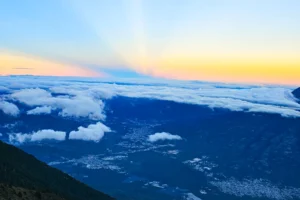
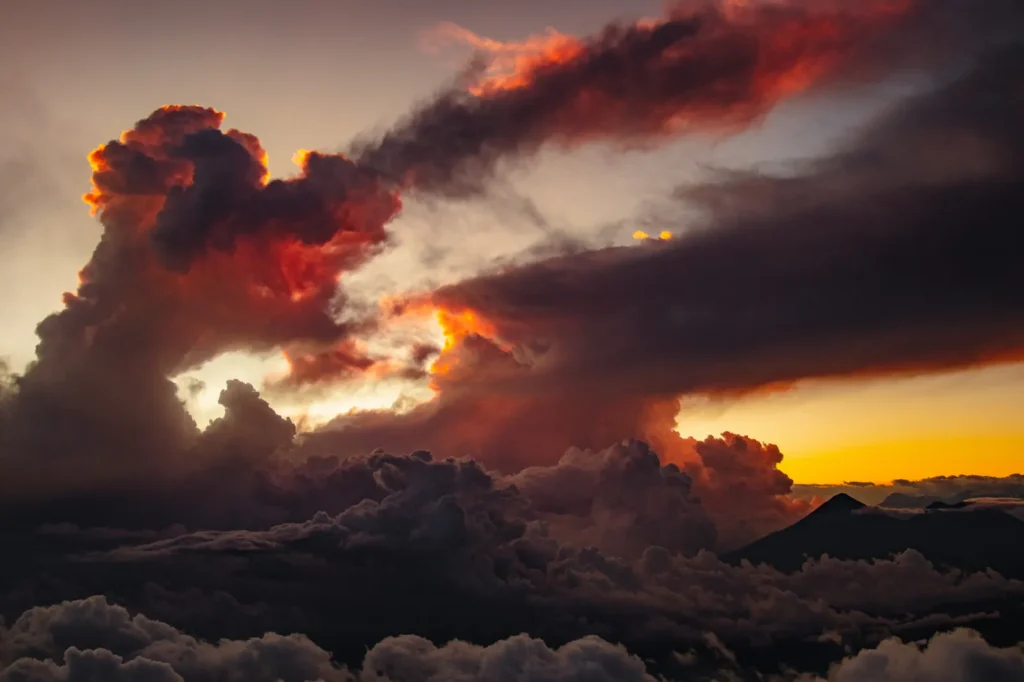
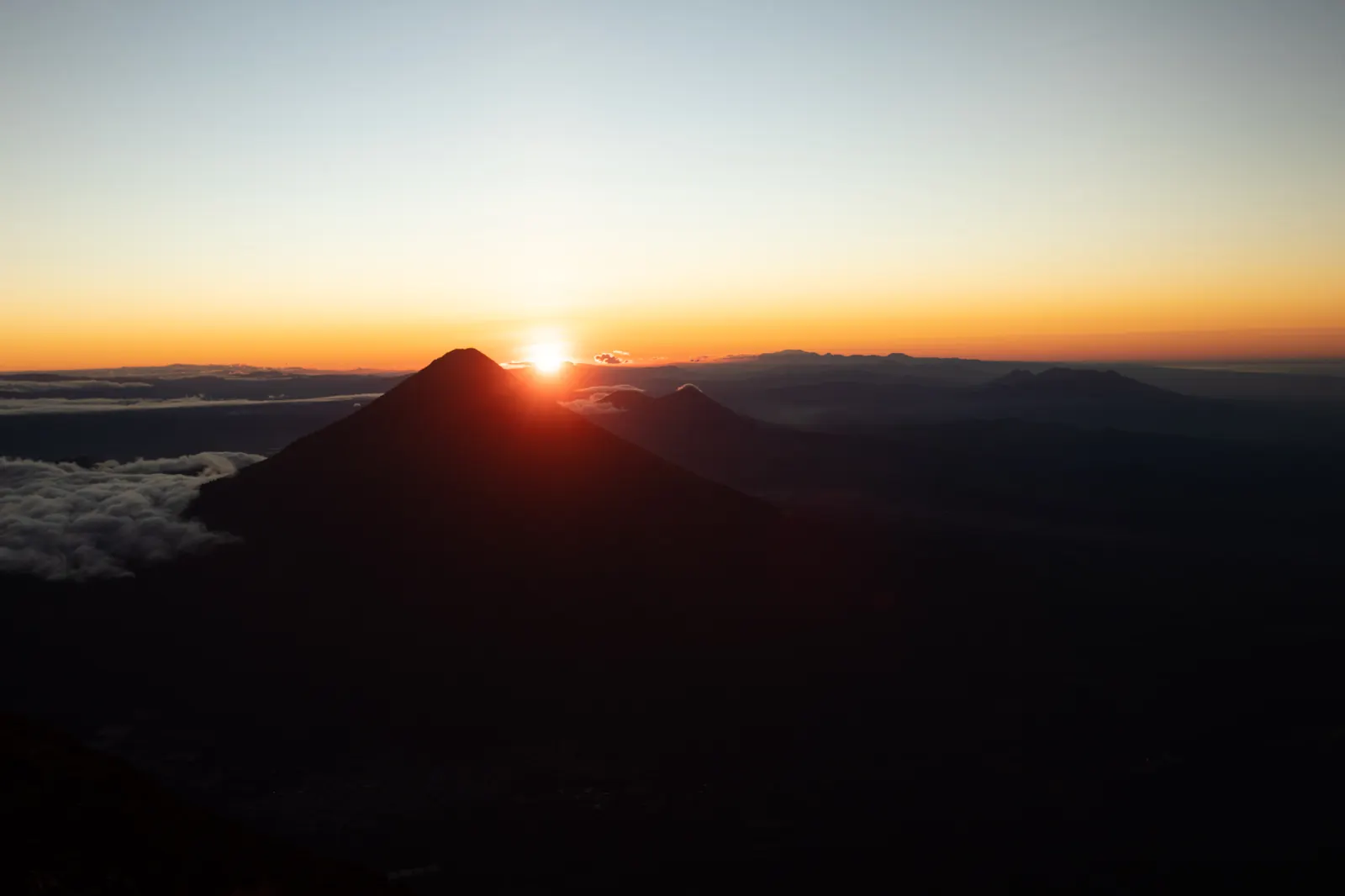
The pre-dawn summit push is timed so you reach 3,976 m as the sun breaks over the horizon, lighting up a sea of cloud with the volcanoes rising through it. This is the photo everyone comes for. Dry-season mornings offer the best odds of a clear, colour-saturated sunrise, but clear mornings are common in the shoulder and rainy months too, the rain usually clears overnight.
A practical note: the summit is cold and dark at that hour in every season, so your warmest layers and a headlamp aren’t optional regardless of when you visit.
Weekday vs. weekend, and how crowds shift
Season sets the baseline for crowds, but the day of the week swings it too. Weekends and Guatemalan public holidays draw the largest groups to base camp year-round; midweek dates, especially Tuesday through Thursday, are noticeably quieter. If a more peaceful mountain matters to you, combining a shoulder-season month with a midweek date gives you the best of both, green slopes, clear-ish mornings, and space to breathe. Pairing that with our Private Cabin gives couples and small groups the most secluded version of the experience.
Our honest recommendation
If you have total flexibility and want the highest chance of a picture-perfect summit, come in February or March; clear, stable, and stunning, just dress for genuine cold. If you’d rather have the mountain quieter and don’t mind gambling a little on afternoon clouds for clear mornings, the shoulder months of May, June, and November are our quiet favorites: green, calm, and often every bit as rewarding.
Whichever window you choose, the experience at the heart of it doesn’t change, a night on a volcano watching another one erupt, and a sunrise you’ll talk about for years. When your dates are set, you can lock in your Acatenango overnight hike and we’ll handle the rest.
Frequently asked questions
What is the best month to hike Acatenango?
For the clearest skies and best summit views, January through March. For fewer crowds and greener landscapes, the shoulder months of May, June, October, and November. There's no truly "bad" month — each trades weather certainty for crowds or scenery.
Can you hike Acatenango in the rainy season?
Yes, and many travelers do. Rain typically falls in the afternoon and clears overnight, so mornings — when you summit — are often clear. Trails are muddier and views less guaranteed, but the slopes are lush and base camp is far quieter.
How cold does it get at the top of Acatenango?
Summit temperatures generally sit around 0–5°C (32–41°F) at night and can drop below freezing in December and January, colder with wind chill. Warm layers are essential in every season.
Will I see Fuego erupt regardless of when I go?
Fuego is active year-round and often erupts every 15–20 minutes. Whether you see it clearly depends on cloud cover, which is why dry-season nights offer the best odds — though clear evenings happen in every month.
How far in advance should I book?
For peak dates (January–March and the December holidays), book as early as your plans allow — popular dates and private cabins fill weeks ahead. Shoulder and rainy-season dates are easier to secure closer in.