If you’ve been reading about Acatenango, you’ve probably noticed the reviews swing between two extremes. Some people call it the best thing they did in all of Central America. Others mention sore legs, a freezing night, and clouds that hid the view. Both are telling the truth, and that’s exactly why the “is it worth it?” question is worth answering honestly, before you book anything.
We run this hike out of Antigua, so we have an obvious bias. But we’d rather you arrive knowing what you’re getting into than book on hype and feel misled. So here’s the straight version: for most people, Acatenango is absolutely worth it, but only if you go in with the right expectations. Let’s unpack what that means.
What makes it worth it
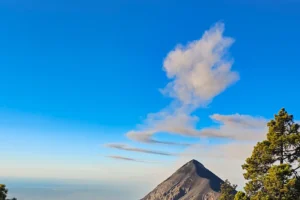
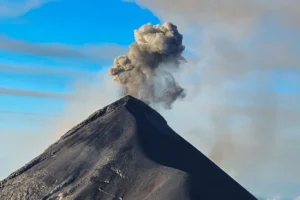
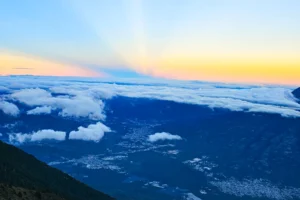
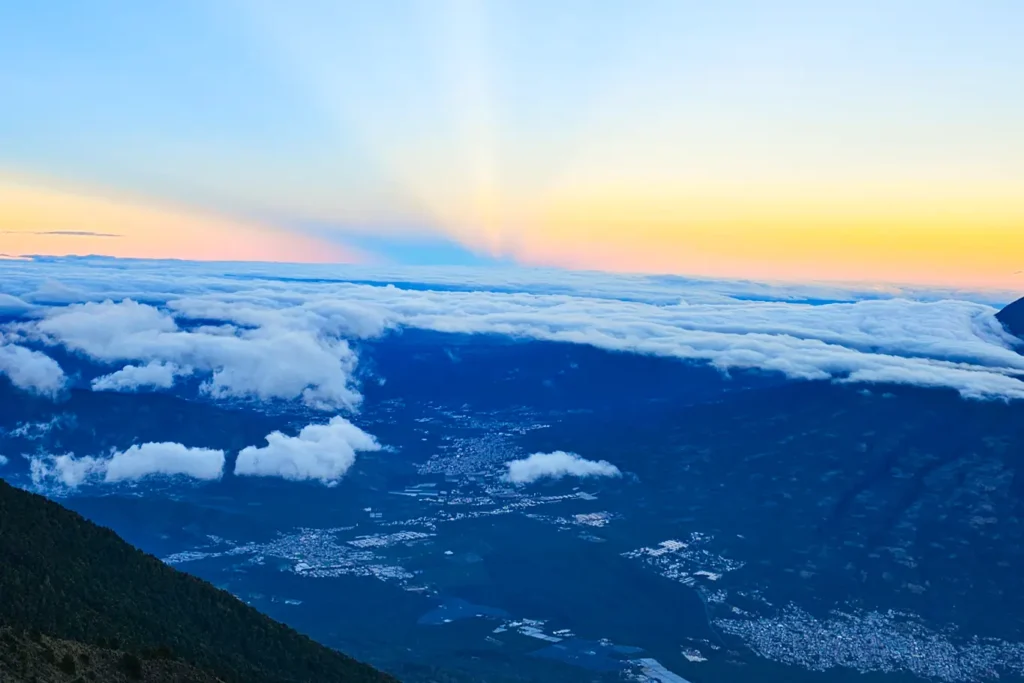
There is genuinely nothing else like it. You hike to a camp on the side of one volcano and spend the night watching another one, Volcán de Fuego, erupt against the dark, often every 15 to 20 minutes, throwing glowing rock into the sky. Then, before dawn, you climb to the 3,976-meter summit and watch the sun rise over a sea of cloud with the volcanoes breaking through it.
People describe the moment Fuego first erupts at night as the point where the climb suddenly makes sense. It’s not a viewpoint you drove to; it’s one you earned, and that changes how it lands. The sense of accomplishment is real, and so is the camaraderie, you go up as strangers and come down as a group that watched a volcano erupt together. For a huge number of our guests, it’s the highlight of their entire trip and the story they tell for years.
The hard parts (told straight)
Now the honest caveats, because pretending they don’t exist is how people end up disappointed.
It’s physically demanding
The climb is steep, the altitude is real, and the descent is hard on your knees. If you’re hoping for a gentle stroll, this isn’t it. (We break down exactly how hard in our difficulty guide.)
The night is cold
You’re sleeping at around 3,600 meters. Even with provided gear, it’s chilly, genuinely cold in December and January. Some people don’t sleep deeply at altitude.
The view depends partly on weather
This is the big one. On a clear night and morning, it’s transcendent. If clouds roll in, you may not get the postcard sunrise, though Fuego’s eruptions are often audible and visible even through some cloud, and the experience of being up there rarely disappoints entirely. Choosing the right season improves your odds a lot (see our guide to the best time to hike Acatenango).
It’s basic comfort
Rustic cabins, simple food, a long day on your feet. It’s an adventure, not a spa.
Here’s the thing: none of these are reasons not to go. They’re reasons to go prepared, and to choose an operator who softens the rough edges with proper gear, real cabins, and good guiding.
So, is it worth it for you?
This is the more useful question. Acatenango is worth it if:
- You want a real adventure and a story, not just a relaxing holiday.
- You’re reasonably active, or willing to use the options that make it easier (more below).
- You can accept that weather is a variable and go anyway for the whole experience, not just one photo.
- Watching a volcano erupt overnight sounds like your kind of bucket-list moment.
It might not be worth it for you if you have a heart or respiratory condition that makes altitude risky, you actively dislike physical effort and cold, or you’d be devastated if clouds hid the summit view. In those cases, the gentler Pacaya day hike might be the better call, and there’s no shame in that.
How we make it more “worth it”
A lot of the negative reviews online trace back to budget tours that cut corners, thin gear, freezing nights, overcrowded camps. The experience is far more worth it when the discomfort is managed. Here’s how we tilt the odds:
The climb doesn’t have to break you
Our 4×4 Basecamp Ride carries you and your gear up the steepest section, so you arrive with energy for the summit instead of arriving wrecked. For many guests, this single option turns “type 2 fun” into genuinely enjoyable.
You sleep warm
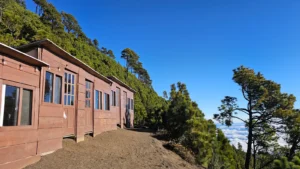
Real cabins with beds, sleeping bags, and provided cold-weather jackets, not a thin tent and a prayer. Warm sleep changes how you feel about the whole night.
Small groups and good guides
Guides who set a sustainable pace and know the mountain make the climb more rewarding and far safer.
The Fuego add-on
If you want to maximize the payoff, the Fuego ridge hike gets you closer to the eruptions, for many, the single most unforgettable part.
The moments people remember
Ask returning hikers what made it worth it, and they rarely mention the summit photo first. They mention the unexpected things: the first time Fuego rumbled and the whole camp went silent, then erupted into cheers. The campfire conversations with strangers from six countries. The strange, total quiet at altitude after dark. The way the cold made the hot dinner taste incredible. Lying in a cabin doorway watching lava glow against the stars, deciding to skip sleep because you didn’t want to miss the next eruption.
Those moments aren’t on any itinerary, and they’re the ones that turn “was it worth it?” into “when can I go back?” The summit sunrise is the headline, but the night itself, the eruptions, the people, the sheer improbability of where you are, is what most people carry home. It’s the rare trip where the discomfort becomes part of the story rather than a footnote to it.
How to make sure it’s worth it for you
If you want to load the dice toward an unforgettable experience, three choices matter most. Pick your season for the best shot at clear skies (our best-time guide breaks it down). Choose an operator that includes proper gear and real cabins, so the night is comfortable enough to enjoy. And go in with the right mindset, treat the weather as a variable, embrace the effort, and you’ll almost certainly come down a convert. The travelers who frame it as “an adventure with a chance of an epic view” are rarely disappointed; the ones expecting a guaranteed, effortless postcard sometimes are.
The verdict
For the overwhelming majority of reasonably active travelers willing to embrace a challenge, yes, Acatenango is worth it, and then some. It asks for effort and a little luck with the weather, and it returns one of the most extraordinary nights you can have outdoors anywhere. The people who regret it are usually the ones who went underprepared, on a bargain tour, expecting comfort. The people who love it went ready for an adventure, and got one.
If that sounds like you, the next step is easy: choose your dates and lock in the Acatenango overnight hike. We’ll handle the gear, the cabin, and the guiding, you bring the willingness to be amazed.
Frequently asked questions
Is the Acatenango hike worth it if the weather is bad?
Often, yes — Fuego's eruptions are frequently visible or audible even with some cloud, and the overnight experience stands on its own. That said, clear skies make it dramatically better, so choosing the dry season or a clear-forecast window improves your odds. No operator can guarantee the weather.
Is Acatenango worth it for non-hikers?
It can be, especially with the 4x4 ride to base camp to reduce the climb. If you strongly dislike physical effort or cold, the shorter Pacaya hike may suit you better. Acatenango rewards those who embrace a challenge.
Why do some people say Acatenango wasn't worth it?
Usually one of three reasons: bad luck with clouds, an underprepared budget tour with poor gear and a freezing night, or expecting an easy walk. Good preparation and a quality operator address all three.
Is the overnight better than a day hike?
Yes — the overnight is the whole point. Fuego's eruptions are most spectacular after dark, and the pre-dawn summit delivers the sunrise. A day hike misses the best of both.
Is it worth paying more for a better tour?
On a cold mountain at altitude, what's included matters more than the headline price. Warm cabins, quality gear, small groups, and good guides are the difference between a miserable night and the trip of a lifetime.